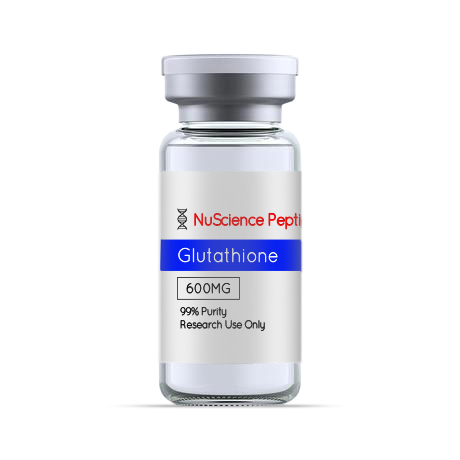
Glutathione Peptide (GSH)
This product is not intended for weight loss, human consumption, or veterinary use. It is sold for research purposes only. Please handle with care and follow all safety guidelines for the specific chemicals involved.
Glutathione Peptide (GSH), a tripeptide composed of glutamine, cysteine, and glycine, serves as a critical intracellular antioxidant, playing a pivotal role in cellular defense mechanisms and metabolic processes. In rat models, extensive research has been conducted to elucidate the multifaceted functions of GSH, particularly its impact on hepatic function, oxidative stress response, and wound healing.
One seminal study investigated the regulation of GSH levels in rat liver, revealing that hepatic GSH turnover is predominantly governed by cellular efflux, with 80-90% occurring sinusoidally. This efflux mechanism is essential for maintaining hepatic GSH homeostasis and underscores the liver’s central role in systemic antioxidant defense.
The significance of GSH in oxidative stress response was further demonstrated in experiments where rats were subjected to GSH depletion using buthionine sulfoximine (BSO), an inhibitor of GSH synthesis. The induced oxidative stress led to severe hypertension and renal damage, highlighting the protective function of GSH against oxidative injuries.
In the context of tissue repair, research utilizing a rat incisional wound model indicated that intracellular GSH levels are sensitive to skin ischemia. The study found that GSH depletion correlated with delayed wound healing, suggesting that adequate GSH reserves are crucial for timely tissue repair and regeneration.
Collectively, these studies underscore the indispensable role of the glutathione peptide in maintaining cellular integrity, modulating oxidative stress responses, and facilitating effective wound healing in rat models. Ongoing research in this domain continues to enhance our understanding of GSH’s therapeutic potential and its applications in clinical settings. Researchers often study Glutathione Peptide alongside other restorative compounds. For synergistic studies, explore our Glow Peptide Blend.
References:
- Lauterburg, B. H., et al. “Sinusoidal Efflux of Glutathione in the Perfused Rat Liver.” Journal of Clinical Investigation, vol. 75, no. 1, 1985, pp. 114–120. https://pubmed.ncbi.nlm.nih.gov/3965506/
- Nakagawa, M., et al. “Induction of Oxidative Stress by Glutathione Depletion Causes Severe Hypertension in Rats.” American Journal of Physiology-Regulatory, Integrative and Comparative Physiology, vol. 279, no. 6, 2000, pp. R2004–R2010. https://pubmed.ncbi.nlm.nih.gov/10904027/
- Schaffer, M. R., et al. “Delayed Repair: The Role of Glutathione in a Rat Incisional Wound Model.” Journal of Surgical Research, vol. 61, no. 1, 1996, pp. 111–116. https://pubmed.ncbi.nlm.nih.gov/8632633/
ALL LITERATURE, INFORMATION, AND DATA, PROVIDED ON THIS WEBSITE ARE FOR INFORMATIONAL AND EDUCATIONAL PURPOSES ONLY.
Properties
| Molecular Formula |
|---|
| Molecular Weight |
| Monoisotopic Mass |
| Polar Area |
| Complexity |
| XLogP |
| Heavy Atom Count |
| Hydrogen Bond Donor Count |
| Hydrogen Bond Acceptor Count |
| Rotatable Bond Count |
| Physical Appearance |
| Stability |
| PubChem LCSS |
Identifiers
| CID |
|---|
| CAS |
| InChI |
| InChIKey |
| Isomeric SMILES |
| Canonical SMILES |
| IUPAC Name |
| mg | |
|---|---|
| Purity |
Related products
Peptides